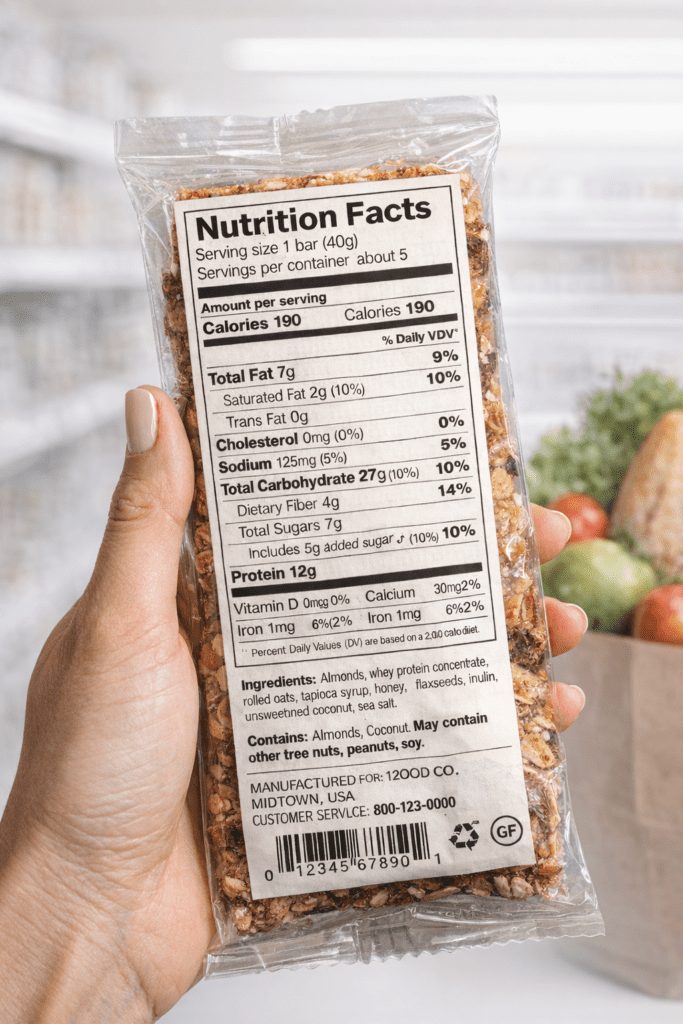
If you’ve ever turned over a packaged food and felt completely overwhelmed—you’re not alone. Food labels are designed to sell, not necessarily to inform. And for women over 40 trying to balance hormones, reduce inflammation, and support metabolism, what’s on the label matters more than ever.
Let’s break it down simply so you know exactly what to look for—and what to avoid.
1. Ignore the Front of the Package
The front is marketing.
Words like:
- “Natural”
- “Gluten-free”
- “Low-fat”
- “Keto”
- “Plant-based”
…can all be misleading.
A product can be gluten-free and still full of sugar and inflammatory oils. It can be “low-fat” but loaded with additives that disrupt blood sugar and hormones.
👉 Flip the package over. The truth is always on the back.
2. Start With the Ingredient List
This is the most important step.
Rule of thumb:
If you can’t pronounce it, your body likely won’t process it well.
Look for:
- Whole, recognizable ingredients
- Short ingredient lists (ideally under 10)
Watch out for:
- Seed oils (canola, soybean, corn, sunflower)
- Artificial sweeteners (aspartame, sucralose)
- Preservatives and additives
👉 Ingredients are listed in order of quantity—so the first 3 matter most.
3. Watch for Hidden Sugar
Sugar hides under many names.
Common ones include:
- Cane sugar
- Glucose-fructose
- Maltodextrin
- Rice syrup
- Agave
Even “healthy” foods like granola, protein bars, and yogurt can be loaded.
👉 Aim for:
- Under 5g per serving (ideally)
- Or ensure protein and fiber are high enough to balance it
4. Check Protein First (Not Calories)
Most people go straight to calories—but that’s not what drives metabolism or satiety.
Instead, ask:
- Does this have at least 10–20g of protein?
Protein helps:
- Stabilize blood sugar
- Reduce cravings
- Support muscle and metabolism
👉 If it’s low in protein, it’s likely not going to keep you full.
5. Look at Fiber for Gut Health
Fiber is key for:
- Digestion
- Detoxification
- Hormone balance
Aim for:
- At least 2–5g per serving
Low fiber = poor satiety + blood sugar spikes.
6. Be Careful with “Low Fat” Foods
Low-fat often means:
- Higher sugar
- More chemicals
- Less satisfaction
Healthy fats are essential for hormone health.
Look for:
- Olive oil
- Avocado oil
- Nuts and seeds
Avoid:
- Highly processed vegetable/seed oils
7. Serving Sizes Can Be Deceptive
A package may look like one serving—but often isn’t.
Example:
- A small snack bag may list nutrition for “½ bag”
👉 Always check:
- How many servings are actually in the package
- Then multiply accordingly
8. Sodium Isn’t Always the Enemy
Many people fear sodium—but it’s not always the problem.
Highly processed foods = problematic
Whole foods with natural sodium = fine
👉 Focus more on:
- Ingredient quality
- Processing level
9. Watch for Food Sensitivities
For many women, hidden sensitivities can stall weight loss and cause bloating.
Common culprits:
- Gluten
- Dairy
- Additives
Even if something is labeled “healthy,” it may not work for your body.
10. Simpler Is Always Better
The best foods don’t need labels.
Think:
- Vegetables
- Clean proteins
- Healthy fats
- Whole, real ingredients
Packaged foods should supplement your diet—not be the foundation.
The Bottom Line
If you remember nothing else, remember this:
👉 Don’t trust the front.
👉 Read the ingredients.
👉 Prioritize protein, fiber, and real food.
When you start reading labels this way, everything changes—you’ll naturally reduce inflammation, balance blood sugar, and support your metabolism without obsessing over calories.
Looking to kick start your metabolism this Spring? The Shulman Solution – A 28 Day Metabolism Fix starts April 20th! You will not want to miss this program. Join here!